Why $1,000 first?
Big savings goals can feel impossible. A first $1,000 is different: it's reachable for many households in a few months, and it covers many of the small emergencies that usually go on a credit card. Once it's in place, every other money goal gets easier.
$1,000 in 90 days is a goal, not a promise. Your results depend on your income and expenses. Saving less is still progress.
The plan: one action per week
- Week 1: Open a separate savings account and automate a payday transfer.
- Week 2: Track every purchase and find your money leaks.
- Week 3: Cancel unused subscriptions and move that money to savings.
- Week 4: Build your first 50/30/20 budget.
- Week 5: Meal-plan and shop with a list.
- Week 6: Call your internet, phone and insurance providers.
- Week 7: Do a no-spend week (true needs only).
- Week 8: Sell 5 things you don't use.
- Week 9: Increase your automatic transfer, even by $10.
- Week 10: Try one small side-income idea.
- Weeks 11–12: Two no-spend weekends with free fun planned.
- Week 13: Review, celebrate and set your next goal.
$250 + $350 + $400 = $1,000.
How the savings tracker works
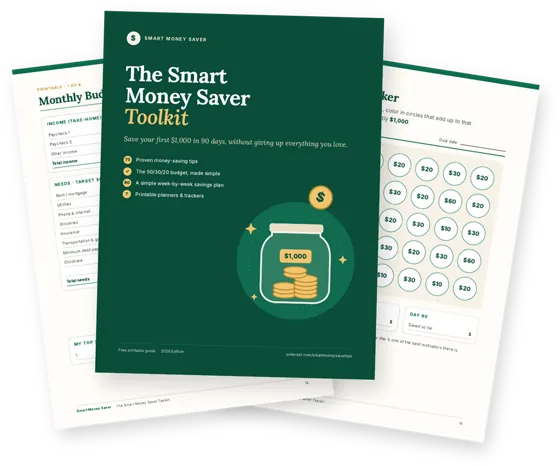
The toolkit's $1,000 tracker has 40 circles worth $10, $20, $30 or $60. Every time you move money into savings, color in circles that add up to that amount. Fill all 40 and you've saved exactly $1,000. Stick it on the fridge: seeing progress every day is one of the best motivators there is.
Where to keep the money
Keep your savings in a separate account from everyday checking, so it's not easy to spend by accident. Many online banks offer high-yield savings accounts with no monthly fees. Compare the current interest rate and make sure the account is FDIC-insured.