Groceries and food
- Plan five dinners, then shop the list. Unplanned extras are where most grocery budgets break.
- Compare unit prices, not sticker prices. The small "price per ounce" on the shelf tag tells you which size is really cheaper.
- Pack lunch three days a week. Swapping a $12 lunch out for a $4 homemade one three times a week saves roughly $100 a month.
- Shop your pantry first. Make at least one meal a week only from what you already have.
- Freeze food before it spoils. Bread, ripe bananas, cooked rice and herbs all freeze well.
Bills and subscriptions
- Run a subscription audit. Scroll through last month's statements and cancel anything you didn't actually use.
- Rotate streaming services. Keep one at a time, watch what you want, cancel, then switch.
- Call your internet provider. Ask about current promotions or a cheaper plan.
- Shop car insurance every year. Get at least three quotes at renewal time.
- Stop paying bank fees. Use an account with no monthly fee and turn on low-balance alerts.
Home and utilities
- Adjust the thermostat while you're away. Turning it back 7–10°F for 8 hours a day can save up to 10% a year on heating and cooling, according to the U.S. Department of Energy.
- Switch to LED bulbs. They use at least 75% less energy than old incandescent bulbs.
- Wash clothes in cold water. Most of a washer's energy goes into heating the water.
Smart shopping
- Use the 48-hour rule. For any non-essential purchase over $50, wait two days. Most of the urge disappears.
- Delete saved cards from shopping apps. Typing your card number is a surprisingly strong brake on impulse buys.
Get all 75 tips
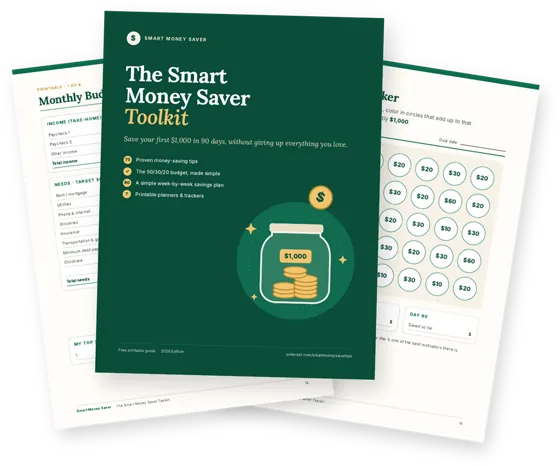
The full Smart Money Saver Toolkit covers 8 areas of life: groceries, home and utilities, bills and subscriptions, smart shopping, transportation, kids and family, fun and entertainment, and holidays and gifts. It also includes a page to write down your top 10 tips and estimate what each one saves you per month.